How to choose glasses when you are nearsighted?
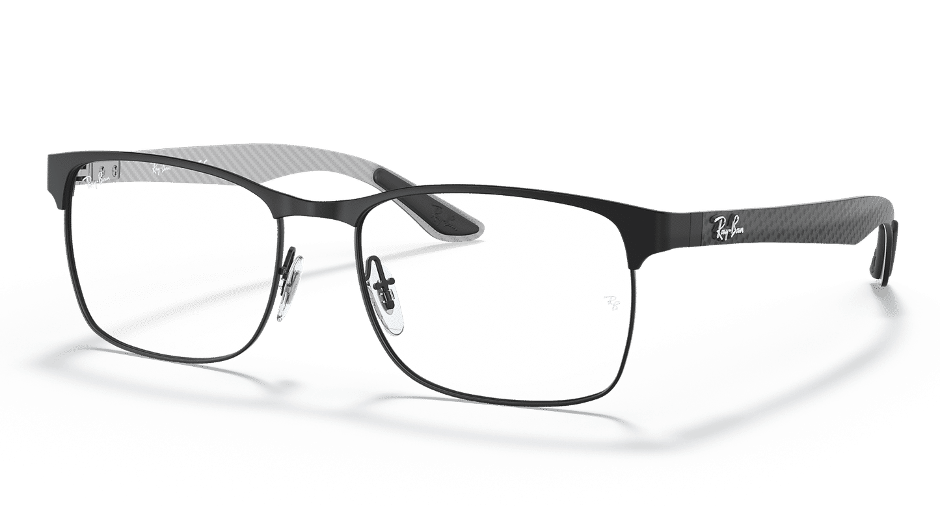
If you are nearsighted, the choice of glasses must be made with care! Your lifestyle, the degree of myopia and its progression are decisive factors. The lenses must meet three main criteria:
- Correct your vision, thanks to a very complex geometry that not only responds precisely to your visual prescription, but also to all your needs and lifestyles.
- Protect your eyes from potentially harmful light (UV, blue light, glare) thanks to technologies that help maintain your visual health.
- Improve your vision with surface treatments that make the lenses more transparent and less messy. Against reflections, fingerprints, etc., choose the best lens coatings that will offer you maximum comfort.
Key Points for Nearsighted People
When you are nearsighted, you expect at least some relief from distance blur, but you also want high-resolution vision that offers precision in detail and relief and is suitable for all situations. Not all corrective lens geometries are created equal. For example, an Eyezen® lens corrects myopia, our distance vision, but, unlike a regular lens, it is also designed for our connected lives, and therefore our need for comfort in close vision.
When you are nearsighted, corrective lenses are concave, meaning they are thicker at the edges than in the center. If you are concerned about the aesthetic appearance of your glasses, as well as your eyes behind the lenses, you should consider high-index thin lenses, which limit the thickness of the lenses and the optical effect of eye contraction. The thickness of a thinned lens can be reduced by up to 40% compared to a regular lens (comparison of the thickness of two Essilor lenses with the same prescription and different indices).
When you are nearsighted, unlike your distance vision, your close-up vision is more than perfect. That is why we are extremely sensitive to all the “defects” that can appear on the lenses: reflections, dust, fingerprints, etc. The unmatched performance of Crizal® coatings frees you from these enemies of vision.
When you are nearsighted, you often have to wear your glasses all day long, not just for work. That is why it is important to make sure you have good protection all day long. Transitions® smart lenses adapt to the light and are a practical solution to protect yourself from changes in light: they lighten indoors and at night, they automatically darken outdoors in the sun.
Regarding spectacle frames, all styles are attainable for people who are nearsighted with vision problems as long as they follow these few very simple tips:
Your myopia is mild, under 1.5 diopters. The good news is that there are no restrictions on your choice of spectacle frame. Rim-drilled frames, extra-wide frames, metal frames, acetate frames… you’re spoiled for choice!
Your myopia is moderate, up to 6 diopters. Thanks to thinner lenses, the choice of a spectacle frame remains very open so that it suits the style you like. Some frames make it easier to hide any unsightly thickness. Examples: a reasonably sized rim that allows the eyecare professional to trim the thickest edge of the optical lens, or an acetate frame with thick rims to hide the lens edge.
Your myopia is high. Choose a small-lens frame. On the other hand, avoid a so-called rimless design (without metal or acetate rims), which will not hide the thickness of the lenses.
Tell me what kind of myopia you have… and I will tell you which lenses to choose.
Antoine, 7 years old, missing two incisors (very simple), a first prescription for a small myopia of 0.75 diopters (–0.75).
To correct his myopia, nothing beats Eyezen® Start lenses, which are suitable for scoring a basket, copying from the blackboard in class, reading or watching a cartoon on his tablet. The important thing for Antoine is that he can keep moving however he wants, without worrying about the stability of his lenses. Airwear® Junior is recommended for its lightness and durability. To protect his eye health in the long run, make sure his lenses offer the best UV protection, for example with the Crizal® Sapphire™ HR coating.
Julie, 10 years old, is an avid reader of comic books. Her myopia has progressed at a steady rate (one diopter per year) since it first appeared three years ago. Today she is –4.50 diopters.
For Julie, Essilor has developed a prescription solution to slow myopia progression in young children. These are Essilor Stellest™ lenses.
Alexandre, 18 years old, a student passionate about everything. Between soccer matches, math homework and video games, his myopia has progressed slightly but steadily since it first appeared. It comes with a mild astigmatism and his prescription reads: –2.50 (–0.75) 90°.
To correct Alexandre’s vision, Eyezen®+ lenses, which are high-definition for distance and optimized for near vision to ease his eyes, are the most suitable for his connected life. For his moderate myopia, the recommended material is Ormix®, with a 1.6 index. Thinner and lighter, it is aesthetically pleasing and comfortable.
Inès, 23 years old and a keen equestrian, has just graduated as a physiotherapist. Her myopia has finally stabilized at –5.00 diopters.
Eyezen® Start lenses are the best solution to correct her myopia. Because she can’t do without her glasses, Inès needs lenses that give her exceptionally clear and comfortable vision at every moment of her life, whether she’s looking into the distance on the road or checking her Instagram feed. Choosing a thinner high-index material is essential for Inès. If she chooses thick-rimmed frames, for example skeleton frames, it would be better with a Stylis® 1.67, or even a very high index Lineis® 1.74 if she opts for a thin metal frame. Inès rides her bike to visit clients so she doesn’t have to switch glasses all day, and Transitions technology lets her move easily through any light situation. She can even pick the tint she wants to match her frames.
Vincent, 45 years old, a management controller, has been myopic since he was 10. In recent months, he has had to take his glasses off to read his figures: he has become presbyopic.
So that he doesn’t have to cheat by removing his glasses and can see well both near and far, Varilux® lenses are now the most suitable for Vincent. Because he is often bothered by light pollution from LED lighting or car headlights, a high-performance anti-reflective coating such as Crizal® Sapphire™ HR is recommended for Vincent. Light glare is captured, the lenses are sublimated.
Do you recognize yourself in the profile of Antoine, Inès or Vincent but need advice on choosing glasses? Ask your eye care professional for guidance; they will help you find the best optical and aesthetic solution.
Reasons you can’t see when driving at night
Driving at night can be more dangerous than driving during the day due to increased road hazards and eye conditions that can affect your ability to see in darker environments. These factors affect drivers worldwide. Have you ever wondered, “Why can’t I see as well when I drive at night?” or “Do I need special glasses for night driving?” While answers may vary depending on cases, this guide will help you understand some specific reasons why you have difficulty seeing when you drive at night and what to do to fix the problem.
Risks associated with night vision while driving at night
Having problems with vision at night is common worldwide. Of 34 million drivers in the United Kingdom, 17 million struggle to see at night, and the reported fatality rate from accidents is three times higher at night than during the day.
A study found that more than 60% of vehicle accidents in India occur at night, due to factors such as visual fatigue and driver performance, as well as generally poor visibility. In South Korea, the fatality rate for accidents occurring at night is 53.38%. These statistics are influenced by the reduced quality of vision that drivers experience during the dark hours of the night.
Glare from headlights
One of the most striking reasons drivers have difficulty seeing at night is light from oncoming traffic.
Headlights, high beams, and fog lights are designed to help drivers see at night, but they can also cause negative effects. Glare can be distracting, irritating, and reduce your reaction time. So what can you do about it?
If you wear glasses, one of the best ways to improve your night vision is to choose lens options with an anti-glare or anti-reflective (AR) coating. This unique lens enhancement can reduce glare emitted by oncoming headlights, reflections from road signs, and other bothersome lights. AR-coated lenses can improve your comfort and visual clarity, increasing your vision for a safer night-driving experience.
Difficulty seeing your dashboard (presbyopia)
Having trouble seeing your instrument panel, center console, GPS, and other small features in your car can be a sign of presbyopia if you are over 40 years old. It is estimated that 1.8 billion people worldwide have presbyopia, and many of these cases go untreated.
The inability to see nearby objects can be a hazard for your night driving, as it may prevent you from monitoring a safe speed on your speedometer, navigating directions on your GPS, or even ensuring that your headlights are working properly. Glasses may be all you need to correct this issue.
Presbyopia affects vision with age and makes it hard for you to focus on close objects. If you are experiencing blur, or it’s been a while since your last eye exam, it may be time to schedule an appointment with your eye-care professional.
Fading road signs and distant objects (myopia)
Nearsightedness, or myopia, is another major risk for night driving if left uncorrected. Myopia makes it difficult to see objects that are far away, such as road signs, debris, cyclists, and pedestrians.
Road hazards are even harder to spot at night when visibility is reduced and light is limited. More light is reflected off road signs—making them even more challenging to read—other road users are harder to see (including vehicles and pedestrians), and animals are more likely to venture onto the road when it’s dark. The inability to see such objects is dangerous for you and everyone else on the road.
It is estimated that myopia affects 1.89 billion people worldwide. If you have noticed a change in your ability to see distant objects while driving (day or night), you may need to update your vision prescription. A quick eye exam with your eye-care professional can determine this.
Streaks or blur around lights (astigmatism)
Astigmatism means that your eye usually has more of a rugby-ball shape than a football, which alters the way light is focused. In fact, light is focused in more than one place, which can cause blur.
When it comes to night driving, astigmatism can also affect how you see lights such as car headlights and street lamps. You are likely to experience increased glare, halos, or streaks around lights, which can be difficult and will probably force you to strain your eyes to focus better. This can be worse at night when there are more lights coming from your dashboard and from other drivers.
Wearing the proper lenses can help mitigate these effects, as lenses can help properly focus light onto the retina. A routine eye exam can determine if you have astigmatism, and your eye-care professional can prescribe corrective lenses to compensate for the irregular shape of your eye. Unfortunately, astigmatism will not heal on its own and you will likely need to wear glasses to correct it.
Night blindness (nyctalopia)
Night blindness, or nyctalopia, refers to poor vision that occurs in low light or darkness. Like presbyopia and myopia, night blindness can pose a dangerous threat to night driving because it limits the visual abilities of an affected driver.
This disorder can be caused by cataract, glaucoma, myopia and other vision conditions. In some cases, glasses can treat night blindness, but treatment ultimately depends on the underlying cause.
Driving in darker conditions can be challenging at first, and night blindness can make it truly dangerous. If you are experiencing symptoms of nyctalopia (halos or glare around lights, difficulty seeing distant objects, blurred vision, light sensitivity, etc.), consult your eye-care professional.
Vehicle and personal safety measures should be taken every time you get behind the wheel—but especially when driving at night. According to the U.S. Federal Motor Carrier Safety Administration, 23% of all injury crashes and 37% of all fatal crashes in 2016 occurred between 6 PM and 6 AM.
The Fédération Internationale de l’Automobile (FIA) created the Golden Rules for Road Safety as guidelines for drivers to keep themselves and others safer on the road. To start: check your vision regularly, protect your eyes from glare, and always wear your glasses when driving. The FIA also advises drivers to:
- Always stay attentive
- Obey the speed limit
- Use a child safety seat
- Check their tires
- Don’t text and drive
- Wear reflective clothing
- Wear a helmet (for motorcyclists)
- Stop when tired
- Watch for pedestrians, especially children
- Slow down in areas with children
- Never drink and drive
How to improve your night vision for driving
How can you improve night vision? Beyond the tips above, your vision should be as clear as possible.
Many vision problems that impair your night driving can be treated with prescription glasses or contact lenses. Your eyesight changes with age, so regular eye exams are essential. You may need to update your prescription to drive more safely and effectively at night.
If you suspect a vision issue is directly affecting your ability to drive at night, consult your eye-care professional as soon as possible.
Reducing reflections at night
Sometimes you may still struggle with reflections on your lenses at night, which can be distracting and make night driving uncomfortable. You can fix this by adding an anti-reflection coating to your lenses, which helps eliminate reflections and reduce glare.
Crizal™ Drive Essilor Streetlife is specifically designed to help you feel more comfortable behind the wheel by reducing up to 90% of reflections. In addition, Crizal™ Drive Essilor Streetlife helps protect your lenses against scratches, smudges and dust, and provides an E-SPF 25 rating for extra UV protection, so you can enjoy clear lenses with added UV defense while you’re out and about.
Where can I buy night-driving lenses?
Night-driving lenses can be very helpful and can solve a range of vision problems, not to mention help you feel safer and more comfortable on the road. The right lenses for night driving can give you a level of independence that, for many, can be life changing.
You can find your local Essilor eye-care professional, who will guide you to the right pair of lenses for your individual needs. Your eye-care professional can provide all necessary eye-care services, using the latest technology and lens options, including progressive lenses, single-vision lenses and lens coatings.